In relationships where emotions run deep, small stimuli can trigger big reactions. Whether it's a partner who constantly responds sarcastically, a parent who keeps pointing out your mistakes, or a friend who challenges you to an argument: constant provocation undermines trust and connection. How do you deal with it without losing yourself or damaging the relationship further?

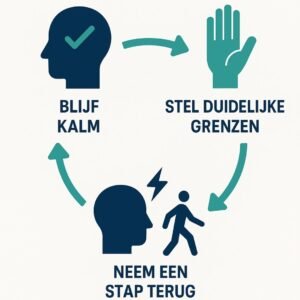
1. Stay calm even if you get hit
The first reflex to a stimulating remark is often a counterattack or retreat; this is a natural reaction. But especially in personal relationships, it is important not to react impulsively and let the situation sink in for a while. Emotions work like a wave: they rise but also subside. So give yourself some time before reacting. This if you usually react immediately (skin) takes practice.
- Take a deep breath and literally distance yourself (walk away if necessary).
- Only respond when you notice you are calming down.
- Realise: you determine your reaction, not the other person.
2. Set clear boundaries
In relationships, it is tempting to let things go to preserve the atmosphere. But transgressive behaviour that is repeated actually undermines the relationship. Setting boundaries is not about creating distance; it should provide clarity if the partner, friend is willing to listen.
- Emphasise what you are not okay with (“If you address me that way, I don't feel safe.”).
- Say what you need (“I want us to talk about this without sarcasm.”).
- Stick to your own terms, even if it feels uncomfortable.
3. Don't react to every prick
Someone who provokes, often tests unconscious your limits or seeks affirmation through conflict. By not joining the game, you take the energy out of confrontation.
- Ignore disparaging remarks if they are meant to put you off.
- Respond neutrally or simply say, “I don't want to talk about this right now.”
- Change the subject or indicate that you want to continue the conversation at a quieter time.
This approach does require your interlocutor to be open and respectful of your position.
4. Look at the pattern with distance
In long-term relationships, provocations may have become part of an established pattern. Sometimes they are an expression of unspoken frustration or unmet needs. By distancing yourself, you can often see more than in the heat of the moment.
- Ask yourself: What is my partner (or parent, friend) really trying to say?
- Also take an honest look at your own part: Do I react defensively, critically or avoidantly?
- Sometimes silence or a time-out is the wisest choice.
A real-life example:
You live with your partner. Over dinner, he makes another caustic remark about your work: “Ah, you're just sitting there tapping away anyway.” You feel irritation bubbling up, but instead of snarling, you calmly say, “I find it annoying when you talk about my work like that. If it happens more often, I'll stop the conversation.” The next time it happens, get up and leave the room. No argument, no drama, but a clear boundary.
Continuing to respond to provocations usually only reinforces the negative dynamic. Want to break patterns, learn to control your own boundaries or communicate better in your relationship? Then take a look at the list of therapists specialising in relationship coaching, communication and self-regulation.
 EN
EN  NL
NL